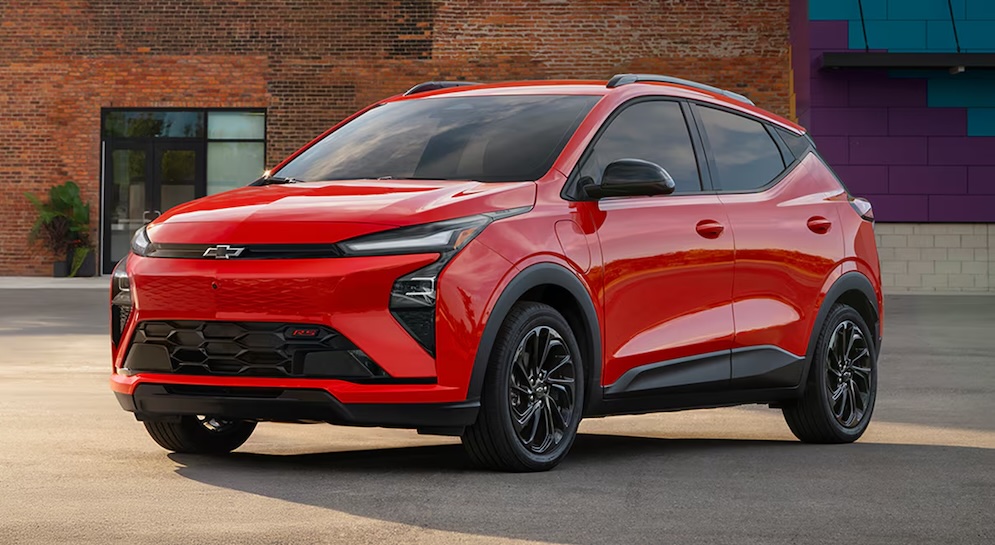
The 2027 Chevrolet Bolt is back, and General Motors has made some significant improvements to one of America’s most affordable electric vehicles. While the redesigned Bolt looks remarkably similar to the previous Bolt EUV, the changes underneath are substantial. A new electric motor, updated battery chemistry, faster charging capability, and a redesigned interior make this compact EV more appealing than ever.
In a recent review (see video below) from the Driven Car Reviews YouTube channel, automotive journalist Tom Voelk explores whether the new Bolt delivers the affordability, practicality, and everyday usability that made the original such a popular choice.
Pricing remains one of the Bolt’s biggest advantages. The entry-level 2027 Chevrolet Bolt LT starts at just under $29,000, including destination, making it one of the least expensive new electric vehicles available in the United States. Every trim receives the same battery capacity and an EPA-estimated driving range of 262 miles. The sportier RS trim adds additional styling and comfort features, while available options include a panoramic glass roof, advanced technology, and GM’s Super Cruise hands-free driving assistance. Even a fully equipped RS remains competitively priced compared with many other electric crossovers.
Before purchasing your next Chevrolet Bolt, visit Quotes.EverymanDriver.com to explore invoice pricing and dealer offers in your area. Comparing available pricing before visiting a dealership can help you evaluate your options and potentially save money on your next electric vehicle. Get Invoice Pricing Today — Fast and Free!
Under the hood, the 2027 Bolt features a new electric motor borrowed from the larger Chevrolet Equinox EV, producing 210 horsepower and 169 lb-ft of torque. Power is delivered to the front wheels through a single-speed transmission. Although torque output is lower than the previous generation, improved gearing helps maintain responsive acceleration. The Bolt can accelerate from 0–60 mph in approximately 6.7 seconds, according to testing cited in the review. Tom Voelk praises the smooth power delivery, quiet operation, and nimble handling, particularly in urban environments where the Bolt’s compact dimensions make it easy to maneuver.
Perhaps the most important improvement is charging performance. The 2027 Bolt uses a 65-kWh lithium iron phosphate battery pack and now supports DC fast charging at rates up to 150 kW, a substantial improvement over the previous model’s approximately 50-kW capability. Chevrolet estimates that charging from 10% to 80% takes about 26 minutes under suitable conditions. The Bolt also features a North American Charging Standard (NACS) port, expanding access to compatible charging infrastructure. During his testing in cool Seattle weather, Voelk reported approximately 250 miles of estimated range in mixed driving, close to the official EPA figure.
Inside, Chevrolet has redesigned the cabin with improved technology and an emphasis on practical storage. The updated infotainment system features responsive graphics, integrated Google services, voice commands, and access to popular music applications. However, Apple CarPlay and Android Auto smartphone projection are not supported, which may disappoint some buyers. Physical controls remain for several important functions, while available features include heated and ventilated front seats, a heated steering wheel, surround-view cameras, and Super Cruise. The interior relies heavily on hard plastics, but its numerous storage compartments and functional layout help compensate for the budget-oriented materials.
Despite its small exterior dimensions, the Bolt provides surprisingly generous passenger and cargo space. The flat-floor design helps maximize interior room, while the rear seats offer usable legroom for adults, although taller passengers may find the seat cushions and foot space somewhat restrictive. Cargo capacity measures just over 16 cubic feet behind the rear seats and expands to approximately 56 cubic feet with the seats folded. Additional underfloor storage adds flexibility, making the Bolt practical for grocery shopping, commuting, and everyday errands.
On the road, Voelk describes the Bolt as smooth, quiet, and enjoyable to drive, with a low center of gravity that contributes to confident cornering. The suspension delivers a comfortable ride on smoother pavement but can become somewhat bouncy over rough surfaces. Adjustable regenerative braking allows drivers to tailor the one-pedal driving experience, although the previous generation’s steering-wheel regeneration paddle has been eliminated. Available Super Cruise adds hands-free highway driving capability on compatible roads, including automated lane changes, making the Bolt unusually well-equipped for an affordable electric vehicle.
One important consideration is the Bolt’s production future. According to the review, Chevrolet plans to manufacture the new generation for a limited period before converting its assembly facility to produce Buick SUVs. That could make availability an important factor for interested buyers. Nevertheless, the 2027 Chevrolet Bolt delivers a compelling combination of affordable pricing, improved charging speeds, useful driving range, and everyday practicality. Its biggest compromises include basic interior materials, the absence of smartphone projection, and limited availability, but for shoppers seeking an inexpensive electric vehicle, the new Bolt deserves serious consideration.
Watch Tom Voelk’s complete Driven Car Reviews video below for an in-depth look at the 2027 Chevrolet Bolt RS, including its driving performance, interior features, charging capabilities, and real-world usability.