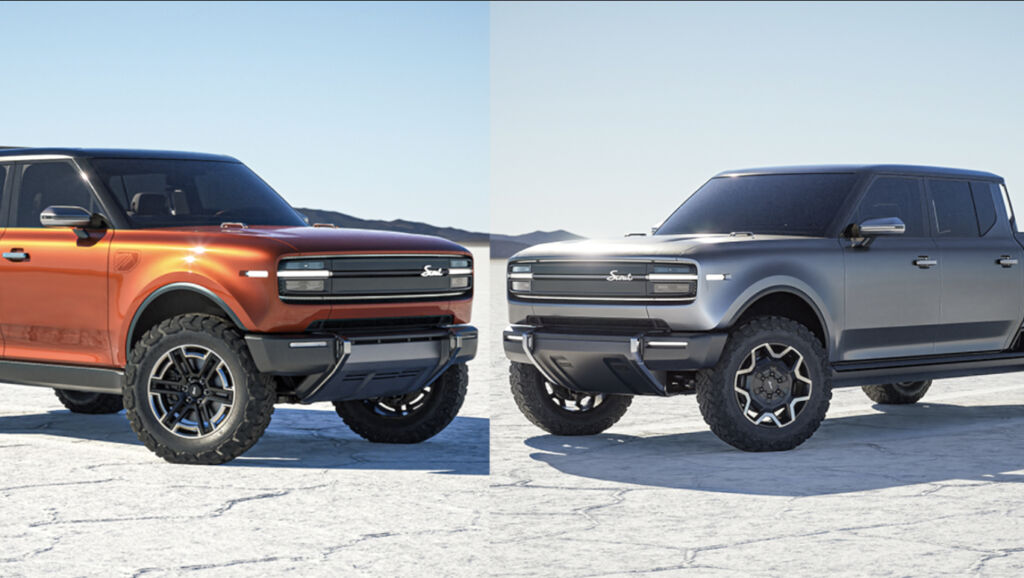
The Scout name is officially back, and it is returning with two production-intent vehicles designed to blend classic American off-road character with modern electrified performance.
The new lineup includes the Scout Traveler SUV and the Scout Terra truck. Both vehicles are being developed by Scout Motors, a Volkswagen Group-backed company created to revive the historic Scout brand for a new generation of SUV and truck buyers.
Rather than simply building another electric crossover or lifestyle pickup, Scout is positioning the Traveler and Terra as rugged, body-on-frame adventure vehicles with serious off-road hardware, available extended-range capability, and a design philosophy that clearly draws from the original International Harvester Scout.
The result is one of the more interesting upcoming entries in the electric and extended-range off-road vehicle market.
The Return of Scout
The original Scout was produced by International Harvester and became known as a simple, durable, go-anywhere utility vehicle. It helped shape the early SUV segment before sport-utility vehicles became mainstream family transportation.
Scout Motors is now bringing the name back with a modern interpretation. The new Scout Traveler and Scout Terra are not expected to be traditional gas-powered vehicles. Instead, Scout plans to offer both pure-electric versions and extended-range versions using an onboard gas-powered generator system known as Harvester.
Both models are expected to be built on a body-on-frame platform, which is notable because many modern electric SUVs use unibody construction. Body-on-frame construction is typically associated with trucks and serious off-road SUVs, giving Scout a more traditional utility-vehicle foundation.
Scout is also targeting entry-model pricing under $60,000, though final pricing, trims, destination charges, and production specifications have not yet been finalized.
Scout Traveler SUV Overview
The Scout Traveler is the SUV version of the new Scout lineup. It is designed as the more family- and adventure-oriented model, with a closed cargo area and a traditional SUV profile.
The Traveler is expected to offer four-wheel drive, body-on-frame construction, front and rear mechanical locking differentials, and serious off-road capability. These features are important because they suggest Scout is aiming beyond the soft-road crossover market.
Official range targets include up to 350 miles for the fully electric version and 500 miles or more for the extended-range Harvester version. The Harvester setup is expected to provide approximately 150 miles of all-electric driving before the onboard generator helps extend total range.
Scout is also projecting towing capability of more than 7,000 pounds for the Traveler SUV, along with nearly 2,000 pounds of payload capacity, depending on configuration.
That gives the Traveler a potentially strong position for buyers looking at adventure-focused SUVs, including shoppers who may also be considering vehicles like the Ford Bronco, Jeep Wrangler, Toyota Land Cruiser, Land Rover Defender, or Rivian R1S.
Scout Terra Truck Overview
The Scout Terra is the pickup version of the lineup. It shares much of the Traveler’s design and platform philosophy but adds the utility of a truck bed.
Scout says the Terra will feature a 5.5-foot bed, along with available power outlets including two 120-volt outlets and one 240-volt outlet in the bed. That could make the Terra useful for camping, job-site work, tools, tailgating, emergency power needs, and outdoor recreation.
The Terra is expected to offer more than 10,000 pounds of towing capacity, depending on final configuration. Payload is also projected at nearly 2,000 pounds.
Like the Traveler, the Terra is planned with both fully electric and Harvester extended-range versions. Pure-electric range is projected at up to 350 miles, while the Harvester model is expected to offer 500 miles or more of total range.
For truck buyers, the extended-range option may be one of the Terra’s most important features. Fully electric trucks can offer impressive torque and performance, but towing range remains a major concern for many buyers. Scout’s Harvester system appears designed to address that concern by providing electric-drive benefits with a backup generator for longer trips.
What Is the Harvester Range Extender?
One of the most important features planned for both Scout vehicles is the available Harvester range-extender system.
Unlike a traditional hybrid where a gas engine may directly power the wheels, the Harvester system is designed around electric drive. The gas-powered generator is expected to recharge the high-voltage battery, helping extend total driving range.
Scout says Harvester models are expected to provide approximately 150 miles of all-electric range and more than 500 miles of total combined range.
This setup could appeal to buyers who are interested in electric vehicles but still have concerns about charging infrastructure, long-distance travel, towing, rural driving, cold-weather range loss, or remote off-road trips.
It also gives Scout a different strategy from many fully electric competitors. Instead of forcing buyers to choose between a gas vehicle and a pure EV, Scout is planning to offer both full-electric and extended-range electric options.
Battery, Charging, and Performance Targets
Scout has released several projected technical targets for the Traveler and Terra.
Fully electric models are expected to use battery packs in the 120 to 130 kWh range. Harvester range-extender models are expected to use smaller battery packs, likely around 60 to 70 kWh, since the onboard generator helps extend driving range.
Scout vehicles are also planned to use NACS charging, with adapter capability for CCS charging stations. That is important as the North American charging market continues moving toward the NACS standard.
Performance targets are also notable. Scout is projecting nearly 1,000 lb-ft of torque from the electric drive units. Fully electric versions are expected to be capable of 0–60 mph in as little as 3.5 seconds, while Harvester range-extender versions are anticipated to reach 0–60 mph in about 4.5 seconds.
As with all pre-production figures, these numbers should be treated as targets until final production specifications are released.
Off-Road Hardware and Utility Features
The Scout Traveler and Terra are being developed with several features aimed at buyers who want real utility and trail capability.
Expected features include:
- Body-on-frame construction
- Four-wheel drive
- Front and rear mechanical locking differentials
- Solid rear axle
- Off-road-focused tires and suspension tuning
- Underbody protection
- Physical controls for key functions
- Available extended-range powertrain
- Strong towing and payload targets
This approach separates Scout from many electric SUVs that focus primarily on luxury, technology, or street performance. Scout appears to be emphasizing durability, usability, and adventure capability.
Another important detail is the focus on physical controls. Modern vehicles increasingly rely on large touchscreens, but off-road buyers often prefer simple, easy-to-reach controls for important vehicle functions. Scout’s interior direction appears to recognize that practical usability still matters in rugged vehicles.
Production Timeline
Scout has indicated that validation vehicles are expected to begin in 2026, with initial production targeted for 2027. Customer deliveries are currently expected to begin in 2028, though timing may change as development continues.
The Traveler SUV is expected to enter production before the Terra truck. Scout has also stated that a strong majority of early reservations are for the Harvester range-extender configuration, which suggests buyers are especially interested in the extended-range version.
That reservation trend is important because it shows where consumer interest may be strongest. While fully electric off-road vehicles have gained attention, many buyers still appear to want the extra confidence of a range extender.
Key Differences Between Traveler and Terra
While the Traveler and Terra share the same broader Scout identity, they are aimed at slightly different buyers.
The Scout Traveler SUV is likely to appeal more to families, outdoor enthusiasts, overlanding fans, and buyers who want a rugged SUV with enclosed cargo space and everyday usability.
The Scout Terra truck is aimed more at pickup buyers who want bed utility, towing strength, worksite flexibility, and adventure capability.
The Traveler offers SUV practicality.
The Terra adds truck functionality.
Both are designed around the same broader idea: combining off-road credibility with electrified driving and optional extended range.
What Still Needs to Be Confirmed
Although Scout has released a large amount of early information, several important details are still not final.
Key unknowns include:
- Final pricing by trim
- Final production specifications
- EPA-certified electric range
- Real-world Harvester fuel economy and charging behavior
- Final towing and payload ratings
- Charging speed
- Interior dimensions
- Warranty details
- Service network plans
- Ownership costs
- Final trim structure
- Availability dates
These details will matter significantly once buyers begin comparing Scout vehicles against established off-road SUVs and electric trucks.
Why These Vehicles Matter
The Scout Traveler and Scout Terra arrive at an interesting time in the market.
Many buyers are interested in electric vehicles but still have concerns about range, charging, towing, and long-distance usability. At the same time, rugged SUVs and trucks remain extremely popular, especially vehicles with strong design identity and real adventure capability.
Scout is trying to meet both demands at once.
The Traveler and Terra are designed to offer electric performance, serious torque, off-road hardware, modern charging capability, and the option of extended range through the Harvester system.
That combination could make Scout appealing to buyers who want something more capable than a typical crossover but less range-limited than some pure electric adventure vehicles.
Bottom Line
The Scout Traveler SUV and Scout Terra truck represent one of the most notable brand revivals in the modern SUV and truck market.
Both vehicles are being developed as rugged, body-on-frame adventure models with available pure-electric and extended-range powertrains. The Traveler targets SUV buyers who want family practicality and off-road capability, while the Terra gives truck shoppers a pickup bed, strong towing targets, and additional utility features.
The Harvester range extender may become one of Scout’s biggest advantages, especially for buyers who like the idea of electric driving but still want more range confidence for towing, road trips, rural travel, and off-road use.
Final pricing, specifications, range ratings, and production details still need to be confirmed. But based on the information released so far, the Scout Traveler and Scout Terra are shaping up to be two of the most closely watched upcoming adventure vehicles in the U.S. market.