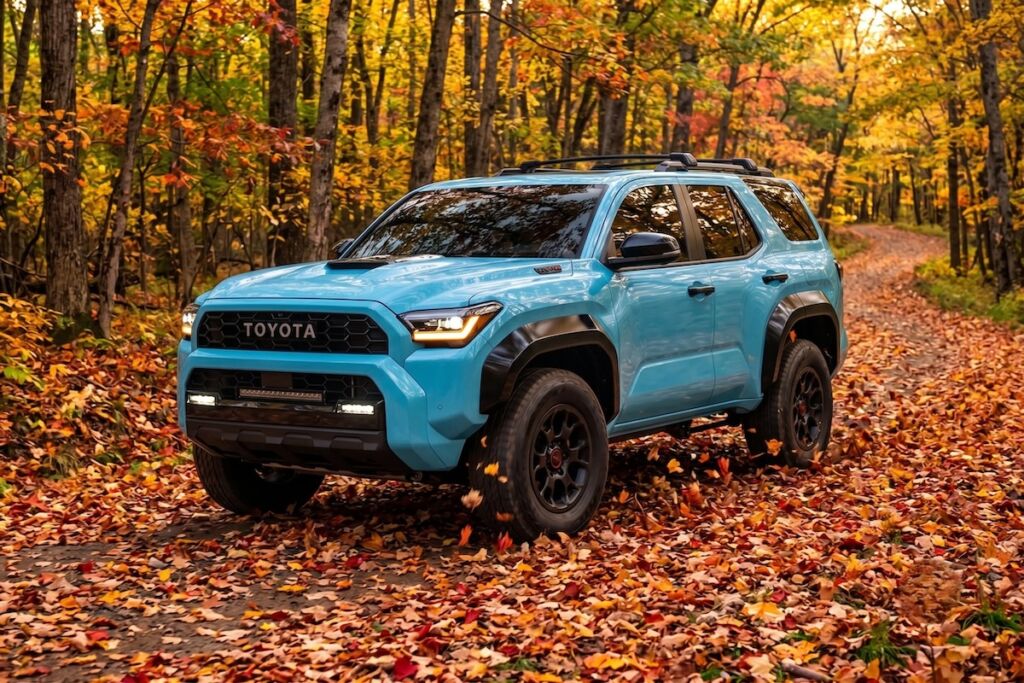
The Toyota 4Runner has always been one of those SUVs people buy because they want something that feels like it can take them just about anywhere, even if most of the time it’s going to the grocery store, work, or soccer practice. My press loan was the 2026 Toyota 4Runner Trailhunter, which takes that idea about as far as Toyota can go. This is a factory-built overlanding version of the 4Runner with serious hardware underneath it—and a starting price of more than $68,000. So the question isn’t whether the Trailhunter is cool. It absolutely is. The better question is whether you actually need everything you’re paying for.
The 2026 4Runner is now in the second year of its sixth generation, and this is a dramatically more modern SUV than the old 4Runner it replaced. It still has the rugged, body-on-frame foundation buyers expect, but now you get modern turbocharged engines, available hybrid power, much better technology, and a cabin that no longer feels like it was designed a decade ago. Toyota also gives you nine different trims, so there’s a 4Runner for somebody who just wants the look and capability all the way up to somebody planning serious off-road adventures.
Visually, the Trailhunter definitely looks the part. You get 18-inch bronze-colored wheels wrapped in 33-inch Toyo all-terrain tires, an ARB roof rack, a high-mounted air intake, RIGID Industries LED fog lights, a heritage-style TOYOTA grille and plenty of Trailhunter-specific details. It has a much more purposeful look than a standard 4Runner, but thankfully Toyota didn’t go completely overboard with it. This still looks like a 4Runner first and an overlanding build second, which I think is exactly how it should be.
Inside, this generation of 4Runner is a huge step forward. The Trailhunter gets a much more modern dashboard, a large center touchscreen, digital instrumentation and the kind of technology buyers now expect when they’re spending this much money. The seating position still feels appropriately upright and truck-like, and visibility is good. Toyota also wisely kept physical controls for a lot of the things you’re going to use regularly, so you don’t have to dig through three menus just to make a simple adjustment. That matters even more when you’re bouncing around on a trail.
The 4Runner has also finally caught up when it comes to everyday technology. A 14-inch touchscreen is available on upper trims like the Trailhunter, wireless Apple CarPlay and Android Auto are part of the package, and Toyota Safety Sense 3.0 is standard across the lineup. And one feature I’m glad Toyota refused to mess with is the power rear window. Lowering the rear glass is one of those uniquely 4Runner features owners love, whether you’re carrying something long, letting fresh air into the cabin, or just giving the dog a better view.
Under the hood of the Trailhunter is Toyota’s i-FORCE MAX hybrid powertrain. It combines a 2.4-liter turbocharged four-cylinder with electric assistance to produce 326 horsepower and a very healthy 465 pound-feet of torque. Those numbers are a massive change from the old naturally aspirated V6, and you notice the torque much more than you notice the fact that this is technically a hybrid. This isn’t a hybrid designed primarily to chase Prius-like fuel economy. Here, the electric motor is being used to add power and low-end torque, which makes a lot more sense when you’re climbing, towing, or working your way through difficult terrain.
Where the Trailhunter really earns its name is underneath. Toyota fitted it with Old Man Emu 2.5-inch forged monotube shocks with rear external reservoirs, additional underbody protection, rock rails, the big Toyo tires, and an onboard air compressor so you can air your tires back up after running lower pressures off-road. This is the kind of equipment people regularly add to an SUV after buying it. The difference here is Toyota has already engineered everything together and you can drive it off the showroom floor ready to go. If you’re genuinely into overlanding, that has real value.
The tradeoff is that most people will never come close to using everything this version can do. And that’s where you need to be honest with yourself before buying one. If your idea of off-roading is a gravel road leading to a campground twice a year, you probably don’t need Old Man Emu shocks, 33-inch tires, an onboard air compressor and an ARB roof rack. The good news is you still get the basic practicality that has always made the 4Runner appealing, including useful cargo space, available seating for up to seven on certain trims and that boxy shape that makes loading gear easier than it is in many more stylish crossovers.
This is also where the rest of the 4Runner lineup deserves a serious look. The 2026 SR5 starts in the low-$40,000 range, while TRD Off-Road and TRD Off-Road Premium models give you legitimate trail capability without jumping all the way to Trailhunter money. The Trailhunter starts at $68,400, and the TRD Pro actually starts slightly higher. For somebody who genuinely wants a factory-built overlanding rig, I can understand paying for the Trailhunter. But for the majority of buyers who want a capable 4Runner and may occasionally take it off pavement, I think one of the TRD Off-Road trims deserves a very close look before spending another ten or fifteen thousand dollars.
After spending time with the 2026 Toyota 4Runner Trailhunter, I think Toyota has built an impressive SUV, but this is definitely a case where buying the right trim matters. The Trailhunter is powerful, extremely capable and already equipped with many of the upgrades serious off-road enthusiasts would add themselves. But if you’re never going to use that capability, you’re paying a lot of money for equipment that mostly looks good in the parking lot. I’d figure out exactly how you plan to use your 4Runner first, then choose the trim that matches that reality. And before heading to a Toyota dealership, visit Quotes.EverymanDriver.com, enter your ZIP code and compare local dealer pricing so you know what these 4Runners are actually selling for in your area.