Here’s what surprised me about the completely redesigned 2026 Mazda CX-5: Mazda changed almost everything buyers complained about—rear-seat room, cargo space, technology, even the overall size—but left the basic engine alone. That makes this new CX-5 better in just about every practical way, but it also creates one pretty obvious question. Is 187 horsepower still enough? That’s going to depend entirely on what kind of driver you are.
The new CX-5 is aimed squarely at someone who wants a compact SUV that feels a little nicer than the typical mainstream crossover without paying luxury-brand money. Standard all-wheel drive helps, the cabin is noticeably roomier, and Mazda still puts more emphasis on how its vehicles drive than many competitors do. If you want neck-snapping acceleration or three-row space, move along. That’s not what this vehicle is trying to do.
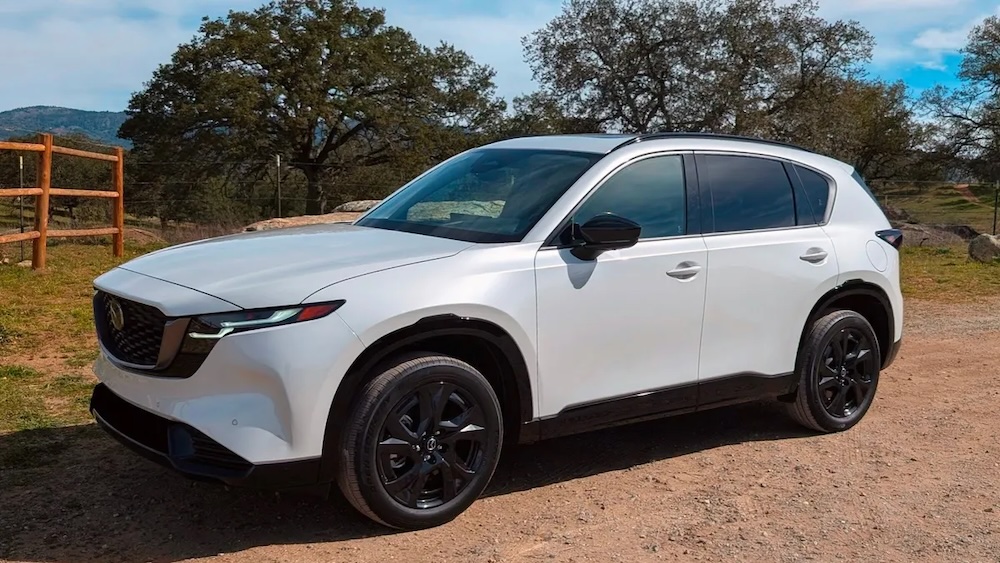
In person, the redesign makes the CX-5 look more substantial. It’s about four and a half inches longer than before, with a longer wheelbase and slightly more width, and you notice it. The nose is wider and more squared off, the lighting looks sharper, and Mazda now spells its name across the rear instead of relying on the traditional badge. Available 19-inch wheels fill things out nicely. It still looks like a CX-5, just one that spent some time at the gym.
The interior may be the bigger change. Mazda cleaned up the dashboard, opened up the cabin and moved toward a much more screen-focused layout. Materials still have that slightly upscale Mazda feel, especially as you move into the better-equipped trims, and available leather, ambient lighting and a panoramic sunroof push it closer to premium territory. Does it feel worth the money? In the mid-$30,000 range, absolutely. Get too aggressive with options and that argument becomes harder.
Up front, the seating position is comfortable, visibility is good and the controls fall where you’d expect. Mazda has also improved the sense of space compared with the previous CX-5. Here’s what I’d do on the test drive: take it onto the freeway with two or three people aboard and accelerate from about 40 to 70 mph. Don’t just decide whether the seat feels good. Decide whether you’re comfortable with the amount of power available when the vehicle is loaded, because that’s the question that matters with this engine.
Technology is a major departure from the old CX-5. There’s a 12.9-inch touchscreen standard, while Premium Plus gets a huge 15.6-inch display. Google built-in is part of the new system, and wireless Apple CarPlay and Android Auto arrive once you move above the base trim. I like the cleaner interface, but spend a few minutes actually using the touchscreen before buying. Mazda used to lean heavily on its center-console controller, and this new approach feels very different. Newer doesn’t automatically mean better for everybody.
The engine is familiar: a naturally aspirated 2.5-liter four-cylinder with 187 horsepower, paired with a six-speed automatic and standard i-Activ all-wheel drive. There’s no turbo for 2026 at launch, and that’s probably the biggest thing existing CX-5 owners need to know. Around town, the powertrain should be perfectly adequate and the six-speed doesn’t spend its life hunting through nine or ten gears. Push harder for a highway pass, though, and you’re going to know you’re working with 187 horsepower. Mazda says a new hybrid is coming for 2027, which could make patient buyers think twice.
Ride and handling have traditionally been one of the reasons to buy a CX-5, and Mazda hasn’t abandoned that formula. The suspension, shocks, steering calibration and AWD system were updated for the larger vehicle, while G-Vectoring Control Plus is still working behind the scenes to help the SUV feel composed. While shooting around the new CX-5, what struck me was how much larger it looks without suddenly feeling like Mazda turned it into a bulky family hauler. On your drive, listen for tire noise on coarse pavement and compare the 17-inch and 19-inch wheels if ride comfort matters to you.
The rear seat is where previous CX-5 owners may notice the redesign fastest. Mazda stretched the wheelbase and specifically targeted more rear legroom, knee room and headroom. The rear doors also open wider, which sounds boring until you’re wrestling a car seat into place while somebody is waiting for your parking space. Adults should be much happier back there, and the reclining 40/20/40 rear seat gives families more flexibility. This is now a much easier SUV to recommend if you’re regularly carrying four people.
Cargo space improves too. The longer body creates a deeper, taller cargo area with a slightly lower loading height, addressing one of the places where the previous CX-5 trailed some rivals. You’re still shopping in the compact SUV class, so don’t expect moving-van capability, but luggage, groceries, strollers, sports equipment and normal family gear should be much easier to manage. This is one redesign where making the vehicle bigger actually solved something instead of just making it harder to park.
Pricing starts at $29,990 before destination for the 2.5 S, followed by Select at $31,990, Preferred at $34,250, Premium at $36,900 and Premium Plus at $38,990. Here’s what I’d actually do: start with the Preferred. Heated front seats, heated steering wheel, power driver’s seat, head-up display, power liftgate and 19-inch wheels give you most of the stuff you’ll appreciate every day without pushing the CX-5 toward $40,000. I’d avoid automatically jumping to Premium Plus just because the 15.6-inch screen looks impressive in the showroom. Here’s how dealers will try to upsell you: premium paint, appearance accessories and the next trim because “it’s only a little more per month.” That’s how a $30,000 Mazda becomes a $40,000 Mazda. Cross-shop the Honda CR-V, Toyota RAV4 and Subaru Forester before signing anything.
The good: standard AWD, dramatically better passenger space, nicer technology and an interior that still punches above its price. The compromise: 187 horsepower isn’t going to impress anybody, especially with passengers and cargo aboard. The trim I’d buy: Preferred. The wild card: that upcoming hybrid makes waiting tempting if fuel economy or additional performance matters to you. Overall, the 2026 CX-5 is a much more complete family SUV, but I’d make absolutely sure you’re satisfied with the engine before bringing one home. Before you buy, compare real dealer pricing at Quotes.EverymanDriver.com and make dealers compete for your business.