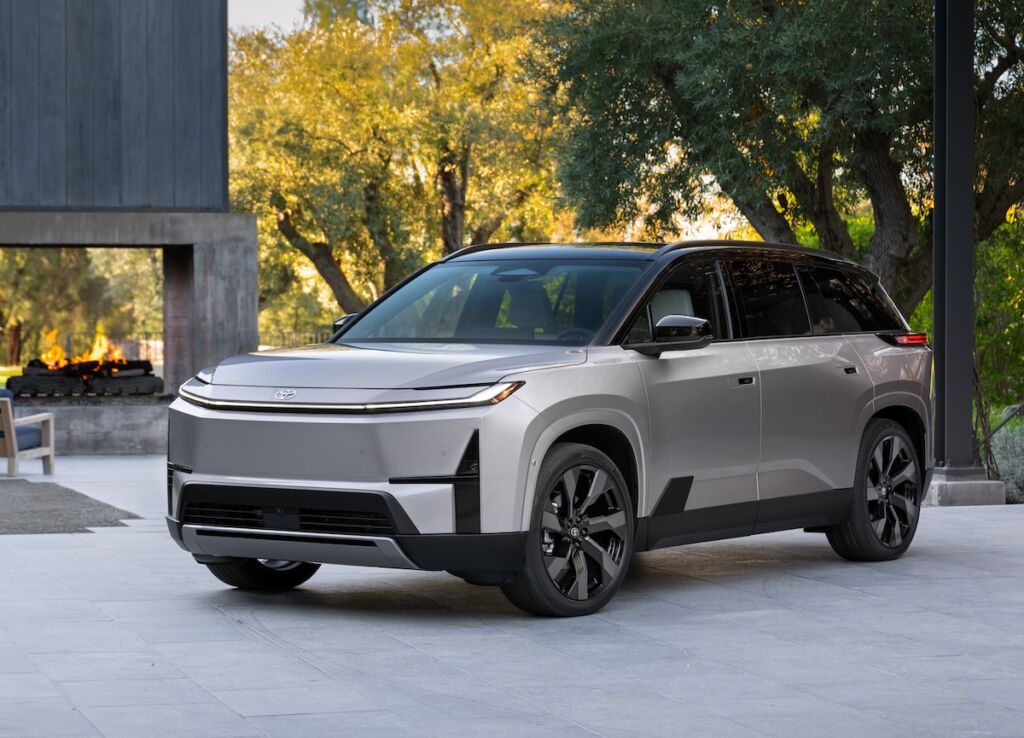
Toyota just pulled the biggest Highlander move in decades: the 2027 model goes fully battery-electric, and it’s also Toyota’s first three-row BEV for the U.S. market. That’s a big deal because Highlander has always been the safe, familiar “family default” choice—and now Toyota’s asking those same buyers to jump into an EV version of it.
The headline is simple: three rows, seating for up to seven, and a major redesign inside and out. Toyota’s leaning hard into a cleaner, more modern look with aero touches like flush-style door handles and full-width lighting elements, and the cabin is clearly going for a tech-forward, premium feel without going full sci-fi.
Inside, Toyota is promising the kind of layout most buyers actually want: big screens, lots of charging, and a more upscale vibe. The highlights are a standard 14-inch touchscreen, a 12.3-inch digital gauge cluster, and lots of practical touches for families—especially if you’re hauling kids, gear, groceries, and everything else that comes with real life.
The 2027 Highlander EV will launch in two trims: XLE and Limited. XLE can be front-wheel drive or all-wheel drive, while the Limited is AWD-only. Translation: Toyota’s trying to keep the lineup simple, but you still need to pay attention to how the drivetrain and battery choices change what you’re actually buying.
Battery options are split between a 77.0-kWh pack and a larger 95.8-kWh pack, depending on trim and configuration. Toyota is quoting manufacturer-estimated range figures, with the bigger-battery AWD versions reaching a 320-mile estimate. Remember the key words there: manufacturer-estimated. Real-world range will depend on temperature, speed, tires, and how much weight you’re carrying.
Performance looks like it’ll be more than enough for a family three-row. Toyota claims up to 338 horsepower and 323 lb-ft of torque on AWD models, while FWD versions are rated lower. The good news is EV torque usually makes daily driving feel effortless; the watch-out is that the quickest, longest-range versions tend to be the ones dealers try to sell at the highest prices.
Charging is where Toyota is trying to calm nerves. The 2027 Highlander EV gets a NACS port for broader access to DC fast-charging stations, and Toyota is quoting an “under ideal conditions” 10% to 80% charge time of around 30 minutes. That’s a nice target, but the real-world experience will come down to charge curves, battery temps, station availability, and how often you’re fast-charging versus doing most of it at home.
One of the most interesting additions is Vehicle-to-Load capability, which can let the Highlander power external devices or potentially act as a backup power source with the right bi-directional accessories. That’s the kind of feature that sounds like marketing—until you actually lose power, or you’re camping, tailgating, or working remotely and need electricity. I’ll want to see the details, the cost of accessories, and how practical it is in the real world.
Cargo and usability still matter more than hype, and Toyota is talking about over 45 cubic feet of space behind the second row when the third row is folded flat. That’s the difference between “family road trip ready” and “we’re playing Tetris with luggage.” If you’ve owned a three-row before, you know the third row is usually for kids or short trips, so the fold-flat and access features are where this will win or lose buyers.
Toyota is also loading it with their latest infotainment and safety tech, including Toyota Safety Sense 4.0 and the newest Toyota Audio Multimedia system. On paper, that means more capability and better driver assistance, but it also means more systems that need to behave perfectly for years—especially on a first-year, all-new EV platform execution.
The manufacturing story is part of Toyota’s pitch here too: assembly in Georgetown, Kentucky, with battery module assembly tied to Toyota’s North Carolina battery facility and a U.S. supplier partner. For some buyers, that’s a confidence boost. For others, it’s just trivia. Either way, Toyota is clearly positioning this as a mainstream, high-volume EV—because that’s exactly what Highlander has always been.
Now, let’s talk like actual car shoppers: Toyota has not announced pricing yet, and that’s the number that will make or break this whole thing. If Toyota prices it aggressively, the Highlander EV could become the “normal” three-row EV a lot of families have been waiting for. If it lands too high, it turns into another showroom trophy with a payment that makes people quietly walk back to hybrids.
If you’re planning to shop this when it hits dealers in late 2026 into early 2027, your best move is to get ahead of pricing games early. Use Quotes.EverymanDriver.com to compare real dealership price quotes in your ZIP code before you ever set foot on a lot—because the difference between a fair deal and a painful one is usually what you know before the first handshake.