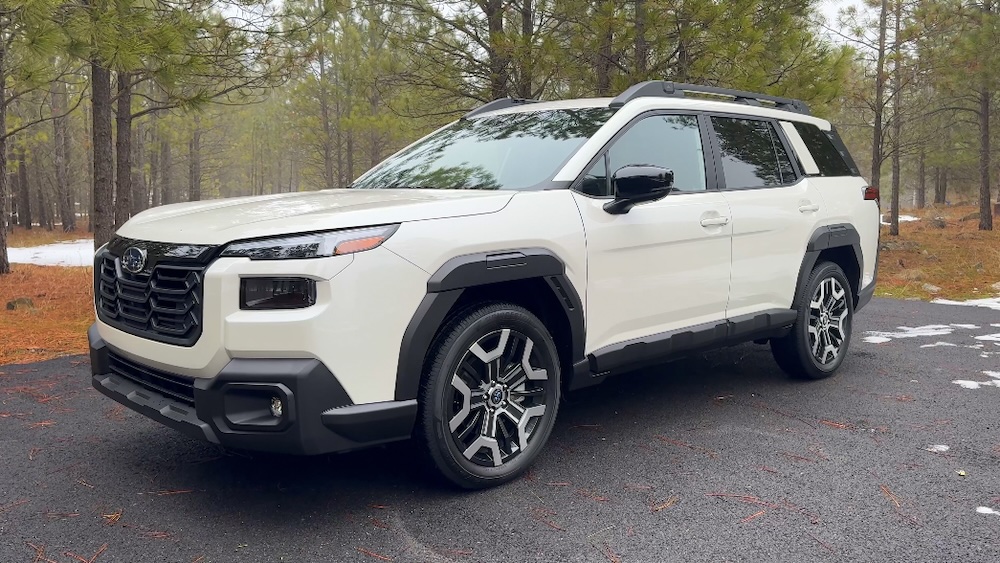
The 2026 Subaru Outback surprised me for one simple reason: in a market full of samey-looking crossovers, the Outback still feels like it has a purpose. It’s not trying to be the sportiest, the fanciest, or the flashiest. It’s trying to be the vehicle you buy when you want one thing that can handle real life—bad weather, rough roads, road trips, dogs, kids, gear—and still feel calm and predictable every single day.
This is for the buyer who wants SUV usefulness without the “big, tall, tippy” feeling of some crossovers. It’s for people who actually deal with winter, rain, gravel roads, trailheads, and messy weekends, and they’d rather have capability built in than bolted on later. Who should skip it? If you want sharp acceleration, a sporty, engaging drive feel, or a luxury cabin that wows your neighbors, there are better fits—because the Outback’s superpower is confidence, not flash.
From the outside, the Outback’s design is still more “rugged wagon” than traditional SUV, and that’s exactly why it works. It sits with a planted stance, it looks ready for the outdoors without screaming “look at me,” and the cladding and ride height are part of the identity. The road presence is quietly tough, and the Outback has that look where you can tell the owner bought it for reasons, not for likes.
Inside, the first impression is practical, modern, and very Subaru. You’re not getting the plushest materials in the segment, but you are getting an interior that’s built for use—easy to live with, easy to see out of, and designed for people who actually put miles on their vehicles. The big question—does it feel worth the money? If your definition of “worth it” is capability, safety confidence, and an all-weather personality, yes. If your definition is “this needs to feel like an entry-level luxury SUV,” you might feel like you’re paying for the engineering more than the decor.
Front-seat comfort is typically one of the Outback’s biggest strengths, and it’s a major reason owners keep buying them. The seating position is natural, visibility is generally excellent, and the Outback feels like a vehicle you can settle into for hours without getting beat up. What I’d watch for on a test drive: do a low-speed U-turn and a couple of stop-and-go launches, then get it up to highway speed. Pay attention to how the steering weights up, how stable it feels at 70 mph, and whether the drivetrain feels smooth or “busy” when you’re just trying to drive normally.
On tech, Subaru tends to give you what you need, but not always in the slickest packaging. The system can be great once you learn it, but it can also feel like it asks for a little patience at first—especially if you’re coming from a brand that keeps everything simple with dedicated buttons. My advice: test the stuff you’ll touch every day—phone pairing, audio controls, climate adjustments, and the backup camera views—because that’s where annoyance lives. If it feels clunky in the lot, it won’t magically feel better after you buy it.
Performance is where you need to be honest about your expectations. The Outback is designed to be steady and capable, not to punch you back in the seat. Power delivery is usually smooth and predictable, and it’s tuned for confidence in all conditions. The real-world vibe is “relaxed and competent,” which is perfect for most Outback buyers, but if you’re the type who wants strong passing power without planning ahead, you should be very intentional about which engine setup you choose.
Ride and handling are where the Outback earns its reputation. It’s composed on rough pavement, stable in crosswinds, and it has that planted feeling that makes long drives feel easy. It’s also one of those vehicles that inspires confidence in bad weather—rain, snow, slush—because the whole package feels like it was engineered for exactly that. Behind-the-scenes tidbit: when I’m filming an Outback-type vehicle, I always try to find a stretch of ugly pavement and a windy highway section, because that’s where the “confidence” vehicles separate themselves from the ones that just look adventurous.
Rear seat reality is usually a win for the Outback, especially for families. Adults fit comfortably, kids have space, and car seats are typically straightforward because the cabin is designed around real people, not just spec-sheet bragging rights. The best use case is the daily driver that also doubles as the weekend escape machine—road trips, sports gear, dogs, and that one friend who always brings too much stuff.
Cargo and utility are the Outback’s love language. It’s the kind of vehicle where the back becomes your lifestyle space: strollers, suitcases, camping bins, coolers, folding chairs, muddy boots—whatever your week throws at you. The low load height makes it easier to use than taller SUVs, and the space is generally long and practical, not just deep. The limitation is simple: if you want maximum boxy cargo volume like a larger SUV, you may find a few rivals that do “bigger,” but the Outback does “usable” incredibly well.
Here’s my strong opinion: the Outback is one of the last mainstream vehicles that still feels like it’s built for people who actually go places. Not just “I like the look,” but “I need it to work.” And I think a lot of shoppers who default to a typical compact SUV should at least drive one before deciding—because the Outback often makes more sense than the trendier options. Let me know in the comments: would you rather have a true wagon-crossover hybrid like this, or do you want the taller SUV shape no matter what?
Value depends heavily on trim choice, and this is where you can make a smart decision or an expensive one. If I were buying, I’d aim for the trim that gives me the features I’ll actually use—comfort, safety, and weather confidence—without paying extra for “nice-to-have” extras I’ll forget about in a month. I’d avoid overbuying power unless I truly need it. And yes, you should cross-shop a few obvious alternatives: a Toyota RAV4 for a more traditional compact SUV feel, a Honda CR-V for all-around practicality, and a Mazda CX-50 if you want a more driver-focused vibe with a tougher stance.
Verdict: The 2026 Outback remains one of the smartest all-weather, all-purpose vehicles for people who live in the real world. It’s calm, capable, comfortable, and built around utility you’ll actually use. It’s not the fastest or the flashiest, but it’s one of the most confidence-inspiring choices in its lane. Choose your trim carefully, drive it on rough pavement and at highway speed, and make sure the tech feels natural to you. Before you buy, compare real dealer pricing at Quotes.EverymanDriver.com and make dealers compete for your business.