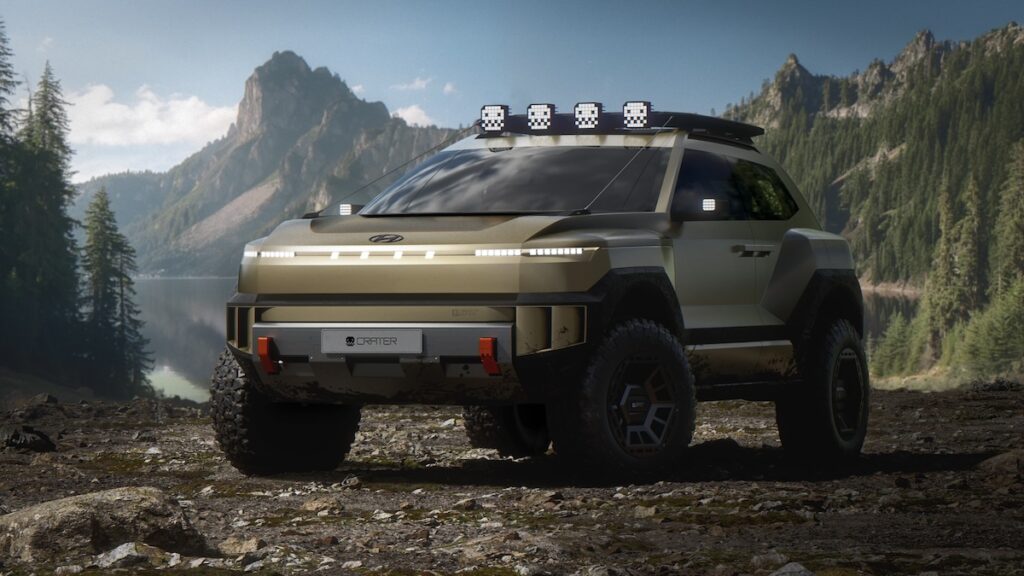
Hyundai just dropped the Crater Concept, and it’s not just a design showpiece—it’s a loud signal that the brand is serious about going off-road and going electric all at once. This isn’t your standard SUV refresh. Think massive tires, a roll cage, a futuristic cabin with a “bring your own device” approach, and styling that screams adventure. If you’re watching where the off-road EV market is heading, this one deserves your full attention.
From first glance the Crater stands apart. Short overhangs, bold wheel arches, 33-inch off-road tires, metal skid plates, and that rugged stance say one thing: this vehicle isn’t meant for the Mormon salt flats—it’s built for the rough stuff. The “Art of Steel” design language gives it sharp edges and industrial confidence, and details like a closed front grille hint at a fully electric setup. In a world of soft-roader SUVs pretending to get dirty, the Crater actually looks like it might.
Slide inside and you’ll find even more ambition. Instead of a traditional screen-heavy interior, Hyundai strips it back and plays with materials: tubular metal instrument bars, sleeping-bag inspired seats, a full roll cage, and a full-width head-up display replacing the center console. The design is playful and practical—yes, there’s a mascot named “Crater Man” scattered throughout the car—yet the build quality, finishes and sense of space feel serious. Whether Hyundai takes this exactly to production or not, you’re clearly seeing where their adventurous EV world is headed.
While Hyundai hasn’t revealed full specification numbers yet, what we do know is telling: full-time all-wheel drive, front and rear locking differentials, terrain modes (snow, sand, mud), colossal tires and rugged underbody protection. The closed grille strongly suggests a battery-electric powertrain—likely built on Hyundai’s existing electric architecture with high voltage and strong off-road torque. In essence, this could be an EV designed not just for paved roads, but for trails, deserts, and adventures where the nearest charger may be more than a mile away.
On the tech and utility front, Hyundai didn’t hold back. Roof-mounted lights, auxiliary recovery hooks (even one that doubles as a bottle opener), detachable camera/flashlight side mirror pods, and an interior layout built for real-world adventure rather than impulse shopping. Yes, this is a concept—it may not hit showrooms exactly like this—but everything in it points toward a future where Hyundai brings serious trail-capability into its EV lineup.
In terms of value and market positioning, the Crater concept opens up a fascinating question: when will this type of vehicle hit production, and at what price? Hyundai already has XRT-badged models in its lineup—Santa Fe XRT, Palisade XRT Pro—but the Crater ups the ante. For buyers wanting rugged EV that doesn’t compromise, this vehicle signals what might be coming. It’s less about today and more about what buyers can expect in the next few years.
The Crater Concept is bold, ambitious, and one of the few EV show cars that genuinely promises function and style. It’s unlikely to roll off a lot this year exactly as shown, but it sets the stage for Hyundai’s next move: serious off-road EVs for the masses. For viewers who dream of getting off the grid without leaving the plug behind, this concept is thrilling. Stay tuned, because this is where the industry’s “soft-roader” era might finally get real.
Before you get excited about being first in line, remember the best way to save money and know what other buyers are paying: check Quotes.EverymanDriver.com to compare actual invoice pricing, incentives, and tell whether the “concept to production” version will be the value play or just a look‐how-far we can go showpiece.