The 2026 Ford Explorer still nails the “one SUV for everything” mission—three rows when you need them, confidence on a winding road when you want it, and pricing that makes sense across the lineup. It’s roomy enough for a real family, easy to place in traffic, and it doesn’t punish you with a floaty, disconnected driving feel the way some three-rows still do.
Here’s the big idea: the Explorer lineup is split into clear personalities now. Active and ST-Line are the value-and-family picks, Platinum leans into comfort, ST is the sleeper-fast option, and Tremor is the factory-built answer for people who actually leave pavement—trailheads, snow country, rutted access roads, camping weekends, and “my driveway is basically a dirt road” life.
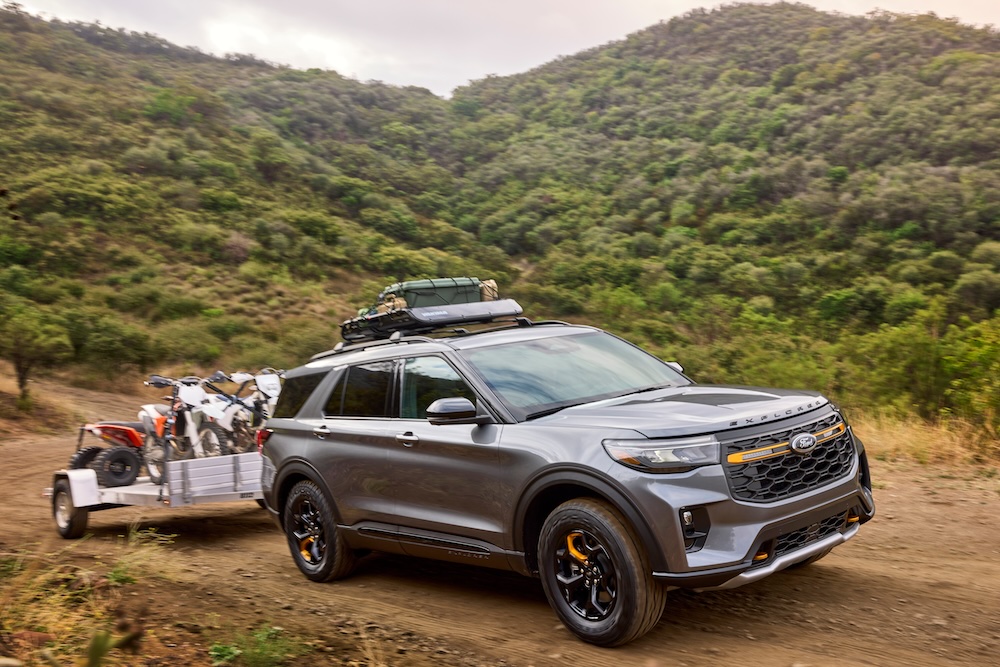
The Tremor is the trim worth talking about because it’s a rare sweet spot: you get the same torquey 2.3-liter turbo engine most Explorers use, but paired with off-road tuning and hardware meant to add clearance and confidence without turning daily driving into a penalty box. It’s not a hardcore rock crawler, and it doesn’t pretend to be. It’s more like the Explorer that’s finally honest about how most families use “off-road” in real life.
Power is a big part of why the Explorer works. The volume engine is the 2.3-liter turbo four with 300 hp and 310 lb-ft, and the key is how it delivers that torque—early, strong, and usable. It feels livelier than most base V6 setups, merges confidently, climbs grades without drama, and doesn’t sound like it’s begging for mercy when you’ve got passengers and cargo onboard.
What makes the Tremor different is how it uses that power. Ford builds in off-road gearing and suspension tweaks so it stays composed on washboard and gravel, with extra clearance and tuning that help on rough access roads. The point isn’t to be extreme—it’s to make the Explorer feel more secure when the pavement ends, without ruining the calm, stable ride you want on Monday morning.
For shoppers still tempted by the ST, yes—the ST is the performance hammer with its 400-hp 3.0-liter twin-turbo V6 and 415 lb-ft of torque, and it’s genuinely quick. But the ST also comes with the expected trade-offs: more fuel consumption and more temptation to drive it like it wants to be driven. The Tremor, meanwhile, is the “smart fun” choice: capability-first, still quick enough, and easier to justify as a daily.
Capability is solid where it counts. Properly equipped, the Explorer can tow up to 5,000 lb, which covers a lot of real-world weekend toys: small boats, pop-up campers, and common single-axle trailers. The big reminder is to match the hitch and cooling setup to what you actually tow—and remember tongue weight and passengers eat into payload fast in any three-row SUV.
Inside, the Explorer’s cabin is functional in a way families will appreciate. This isn’t a “look at me” interior—it’s a “live with me” interior. Useful storage, straightforward controls, and seats that hold up on long drives. The first two rows are adult-friendly for real road trips; the third row is best for kids or short adult hops, which is the truth for most mid-size three-rows.
Cargo practicality is strong when you use the seats the way most owners do. With the third row up, it’s grocery-run ready. Fold it and you open up 46.0 cu ft of space for strollers, bags, and bigger weekend loads. Drop both rows and you get a flat, square floor that’s genuinely useful for home-center runs—no “creative Tetris” required.
Tech is a major reason the Explorer stays easy to recommend. The interface is designed to be learned on day one, not day ten. Wireless Apple CarPlay and Android Auto are standard, the digital cluster is crisp, and available upgrades like Bang & Olufsen audio, surround-view cameras, and highway driver assists make long trips feel easier and less stressful.
Safety coverage is also a key part of the Explorer’s case. A broad driver-assist suite is standard or widely available, including Automatic Emergency Braking, Adaptive Cruise Control, blind-spot monitoring, and lane-keeping assistance. Surround-view cameras and parking sensors help tame the “big SUV in a tight garage” problem, and if you’re towing or running mountain routes, you’ll want to budget for tires and brakes like a grown-up—because weight and terrain always win.
The competition is brutal, but the Explorer still holds its line. Highlander wins hybrid efficiency but feels slower. Pilot and Traverse major in space and comfort, but the Explorer drives with more enthusiasm. Telluride and Palisade feel richer inside, but they can’t touch the ST’s pace—and they don’t offer the same factory “trail-curious” flavor as Tremor. If you want one SUV that commutes, road-trips, and still enjoys a back road—and you actually use dirt roads or snow weekends—the 2026 Explorer Tremor is the smart pivot in this lineup.
If you’re shopping the 2026 Ford Explorer Tremor (or cross-shopping the whole class), don’t negotiate blind. Head to Quotes.EverymanDriver.com to compare real dealer offers in your area on new and used vehicles—so you can see who’s competing, who’s inflating prices, and where the real leverage is before you sign anything.