I didn’t expect the 2026 Toyota RAV4 Hybrid Limited to make me stop and rethink the whole “top trim equals best trim” argument, but it did. Because once you dig into what Toyota changed, what the Limited gives you, and what it costs, this starts looking less like an automatic yes and more like a classic smart-buyer decision point. It’s good. Probably very good. But good and worth-the-money are not always the same thing.
The big story is that the 2026 RAV4 is all-new, now sixth-generation, and Toyota has moved the lineup to electrified powertrains only. On the hybrid side, the Limited sits in the new Core design family, and Toyota lists it at $43,300 MSRP with an estimated 43 city / 37 highway mpg. That is solid efficiency for a compact SUV this size, but let’s not pretend forty-three grand is “budget Toyota” territory anymore. It isn’t.
Under the hood, the hybrid AWD setup is stronger than before. Toyota says 2026 AWD hybrid models are up to 236 combined system horsepower, thanks to the fifth-generation hybrid system and updates to the transaxle, power control unit, battery, and related hardware. That matters, because one of the long-running RAV4 complaints has been that some versions felt more dutiful than lively. This new one should feel less like an appliance.
And unlike some small crossovers that talk a good game and then fold under a little real-life use, the new RAV4 Hybrid actually got more useful. Toyota says AWD hybrid XLE, Woodland, SE, XSE, and Limited trims can tow up to 3,500 pounds, while cargo capacity is listed at up to 37.8 cubic feet. That’s enough to matter for buyers hauling bikes, a small trailer, weekend gear, or just the usual Costco-and-kids chaos. That is real utility, not brochure fluff.
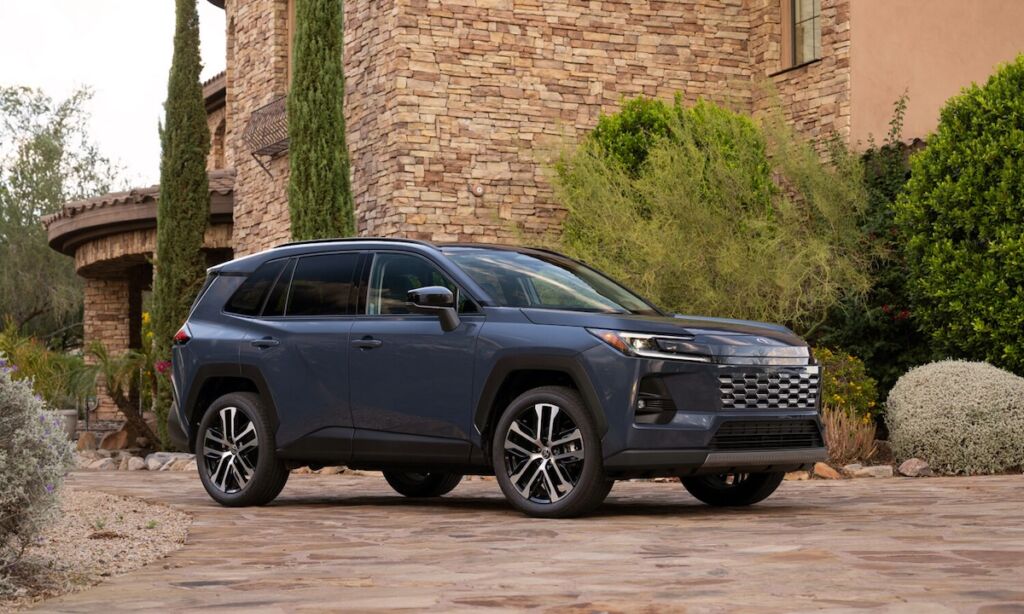
The redesign helps too. The new RAV4 keeps its SUV shape, but Toyota gave it a more modern hammerhead front-end look, broader fender presence, and updated LED lighting. Underneath, it stays on the TNGA-K platform, but Toyota says the 2026 model adds more structural rigidity and uses a high-damping adhesive to reduce micro-vibrations and road noise. That sounds nerdy. It also matters. Because when you’re paying Limited money, the cabin had better feel calmer and more expensive than the cheaper trims.
Inside is where the Limited starts making its case. Every 2026 RAV4 gets a 12.3-inch digital gauge cluster, and upper trims can be fitted with a 12.9-inch center touchscreen. Toyota also moved HVAC controls into the bottom of the screen layout, added faster software through its new Arene platform, and kept standard wireless Apple CarPlay and Android Auto. The Limited also gets a head-up display, which is exactly the kind of feature that makes a daily driver feel a little more premium every single day.
Then you get the Limited-specific stuff. Toyota’s consumer site highlights the panoramic glass roof with power tilt/slide moonroof, a 9-speaker JBL premium audio system, and dual Qi-compatible wireless charging as signature Limited features. That’s a nice package. No question. The problem is that once the equipment list starts sounding this nice, buyers stop asking the harder question: do I need this trim, or do I just like how this trim makes me feel?
Here’s how dealers will try to sell you this one. They’ll lean into the panoramic roof, the JBL audio, the larger screen, the head-up display, and the fact that it’s the nicest non-plug-in RAV4 in the lineup. And to be fair, that pitch is not wrong. The Limited absolutely gives the RAV4 a more upscale, near-entry-luxury vibe. But a good sales pitch and a smart buy are two different things.
Here’s where you’ll overpay. You’ll overpay when you talk yourself into the Limited because it feels like the “complete” RAV4, even though the jump from XLE Premium at $36,100 or even XSE at $41,300 may not materially improve your day-to-day life as much as the price bump suggests. That’s the trap. Top trim logic. It sounds responsible because it’s the “best one,” but sometimes it’s just the most expensive version of a vehicle you already liked two trims ago.
Here’s what I’d actually do. I would cross-shop the XLE Premium and XSE very hard before I signed for a Hybrid Limited. The XLE Premium looks like the value play in the lineup, while the XSE gives you a sportier personality without climbing all the way to Limited pricing. The Limited only makes sense if you genuinely care about the extra comfort and tech touches and plan to keep the vehicle long enough to enjoy them. Otherwise, you’re paying premium money for a compact SUV that still has compact-SUV bones.
What I’d watch for on a test drive is not just acceleration. Everybody will notice the improved power. I’d pay more attention to brake feel, low-speed smoothness, and how the transition between engine and electric assist feels in traffic. Then I’d get it out on a rougher stretch of pavement and see if Toyota’s promised noise and vibration improvements actually show up in the real world. If you’re shopping a Limited, refinement is part of the deal. If it doesn’t feel meaningfully calmer than the lower trims, that matters.
I noticed this while filming RAV4s over the years: Toyota almost always wins buyers over in the first thirty seconds with familiarity. That’s the brand’s superpower. And with this 2026 redesign, I can already tell the new front end and cleaner interior tech are going to make the Limited look especially good on camera and in a showroom. That’s exactly why buyers need to slow down. Sharp presentation is nice. Monthly payments are real.
The tech and safety story is strong, and that’s a real selling point. The 2026 RAV4 is the first Toyota to launch with Toyota Safety Sense 4.0, and Toyota says the new suite gets updated hardware and detection capability through the Arene software platform. Ownership coverage also stays reassuringly Toyota: a 36-month/36,000-mile basic warranty, 60-month/60,000-mile powertrain coverage, 8 years/100,000 miles on hybrid-related components, 10 years/150,000 miles on the hybrid battery, plus ToyotaCare for 2 years or 25,000 miles. That’s the kind of baseline that matters when you’re spending over forty grand.
My strong opinion? The 2026 RAV4 Hybrid Limited is probably going to be one of the best all-around compact SUVs in America. But I’m not convinced it’s the smartest trim for most buyers. I think Toyota knows exactly what it’s doing here: build a very compelling “nice enough to justify it” version of a mainstream bestseller and let shoppers convince themselves the extra features are necessities. Are they? Or would you rather save the money and drop to an XLE Premium?
That’s really the whole story with this vehicle. The new RAV4 Hybrid looks better, feels more modern, gets more power, and still returns strong fuel economy. That’s a winning formula. But the Limited is where practical buying starts drifting toward emotional buying. Not irrational. Just easier to overspend on.
The verdict is simple. The 2026 Toyota RAV4 Hybrid Limited looks like a genuinely strong compact SUV with the right mix of performance, efficiency, tech, and real-world usefulness. But it’s also the trim where Toyota makes it very easy to spend more than you need to. If you want the nicest hybrid RAV4 short of going plug-in, this is it. If you want the smartest buy, do the homework first. Before you sign anything, compare real-world dealer pricing at Quotes.EverymanDriver.com so you don’t overpay for the wrong trim.