The Toyota Tundra gets a meaningful update for 2027, and while it isn’t a complete redesign, there’s enough going on here that I wouldn’t automatically buy a leftover 2026 without comparing the two. Toyota has cleaned up the exterior, upgraded the technology, added more off-road choices and made some interesting changes to the TRD Pro featured in the accompanying video. The Tundra is still competing in probably the toughest pickup segment in America, though, so the question isn’t whether Toyota made it better. It’s whether the 2027 Tundra gives you enough reason to choose it over an F-150, Silverado, Sierra or Ram.
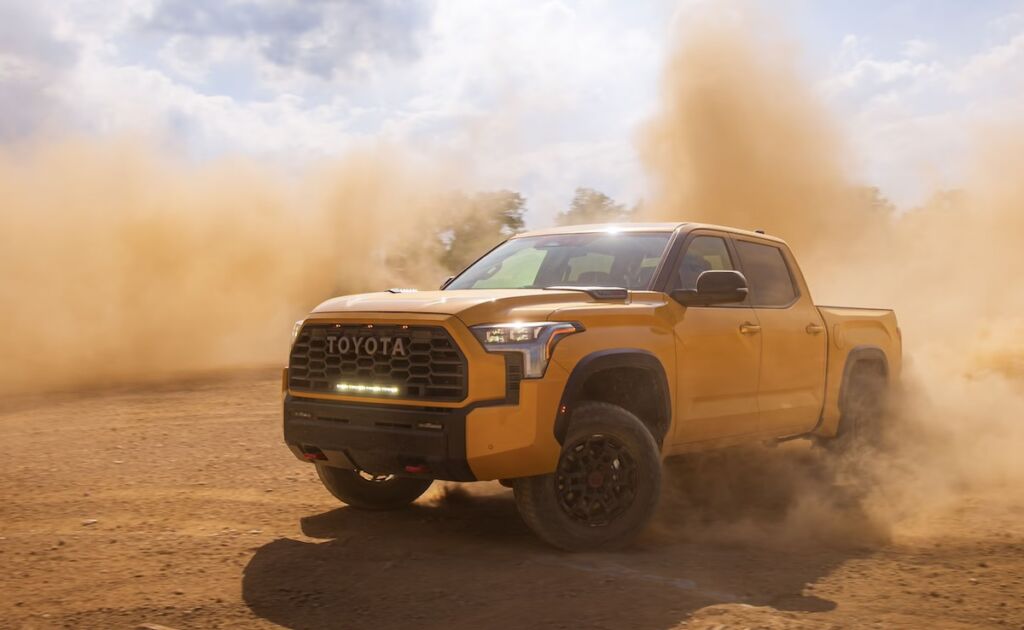
The first thing you’ll notice is the front end. Toyota has given the Tundra a sharper look with revised grille treatments, a redesigned front bumper and new rectangular fog lights. I think it cleans things up without making the truck look completely different just for the sake of being different. The basic Tundra shape still looks big and aggressive, and each trim gets enough personality that an SR5 doesn’t look exactly like a Platinum or TRD Pro. Toyota also upgraded the available grille-mounted LED light bar and added available front recovery hooks, which are changes that actually have some function behind them.
Under the hood, Toyota continues with its twin-turbocharged 3.4-liter V6 powertrains rather than going back to the old V8. That’s still going to bother some traditional truck buyers, but at this point the V8 isn’t coming back. The more powerful option is the i-FORCE MAX hybrid, which has been producing 437 horsepower and 583 pound-feet of torque and is standard equipment in the TRD Pro. The important thing to understand is that Toyota didn’t build this hybrid primarily to chase huge fuel-economy numbers. The electric motor is there largely to add torque and response, which makes a lot more sense when you’re moving a full-size pickup, towing a trailer or working your way through difficult terrain.
The TRD Pro is still the Tundra that’s going to get most of the attention, and Toyota made some worthwhile changes for 2027. The big upgrade is a new set of Tundra-tuned FOX QS3 shocks that allow additional adjustment and are designed to improve control over rough terrain. Toyota also adds standard red tow hooks, and the headline color this year is Honeycomb, which is basically impossible to miss. The TRD Pro already comes with the locking rear differential, skid protection and the other hardware you’d expect from Toyota’s serious off-road trim. If your weekends actually involve trails and rough terrain, there’s real capability here. If the toughest obstacle you encounter is the Costco parking lot, you’re probably buying a lot of equipment you don’t need.
One thing I’ve always appreciated about this generation of Tundra is that it doesn’t drive quite as much like an old-school pickup as you might expect. Toyota switched to a coil-spring rear suspension when this generation arrived, and that helps the truck feel more settled when the bed is empty. Obviously, something like the TRD Pro is going to feel different because of its tires and off-road suspension, but this is still a truck you could comfortably drive every day. That matters because plenty of buyers are spending $60,000, $70,000 or more on pickups that serve as their commuter, family vehicle and road-trip machine during the week.
Technology gets a nice upgrade for 2027 because Toyota’s latest Audio Multimedia system now comes with a 14-inch touchscreen as standard equipment across the lineup. That’s a substantial improvement for buyers considering one of the lower trims because you no longer have to move way up the ladder just to get the big screen. Toyota Safety Sense 4.0 is also standard, bringing the latest generation of Toyota’s driver-assistance technology. And I still like one of the simplest features in the entire truck: the power vertical rear window. Toyota has offered that idea for years, and it remains one of those little things you appreciate once you actually use it.
Of course, this still has to work as a truck. The Tundra gives buyers different cab and bed configurations depending on trim, and towing capability has been competitive with the rest of the full-size segment when properly equipped. Just remember that maximum towing numbers on a website don’t necessarily apply to the truck sitting in front of you. Cab configuration, drivetrain, engine, bed length and equipment can all change what a particular Tundra can tow and carry. If you’re buying one specifically for a camper or heavy trailer, check the ratings for that exact truck before signing anything.
The other big 2027 addition is the new Trailhunter Package, and this may actually make the buying decision more difficult for somebody considering a TRD Pro. Toyota is bringing the overlanding idea we’ve seen on vehicles like the Tacoma and 4Runner to the Tundra, with Old Man Emu suspension hardware, Michelin LTX Trail tires, bronze wheels, additional underbody protection and other equipment aimed at buyers who want to travel farther off pavement rather than simply attack trails at higher speeds. The lineup still includes SR, SR5, Limited, Platinum, 1794 Edition, TRD Pro and Capstone, so there’s a huge difference between buying the Tundra you need and buying the most expensive one you can afford.
And that’s exactly why I wouldn’t shop for a Tundra without driving some competitors. The Ford F-150 offers an almost ridiculous number of configurations, the Chevy Silverado and GMC Sierra give you several engine choices including a diesel, and Ram continues to put a lot of emphasis on interior comfort and technology. The Tundra’s argument is different. You get Toyota’s approach to reliability and resale, a strong hybrid powertrain if you want it, and some genuinely interesting off-road versions. I’d figure out whether your priorities are towing, commuting, luxury or off-roading first and then compare trucks equipped for the same job rather than simply comparing badges.
The 2027 Toyota Tundra is better than before, and I especially like that Toyota didn’t spend this update changing things just to say they changed them. The larger standard screen is useful, the new safety technology matters, and the TRD Pro’s adjustable FOX shocks should be appreciated by owners who actually use them. But the TRD Pro isn’t automatically the Tundra I’d buy with my own money. For many buyers, an SR5, Limited or one of the new Trailhunter-equipped trucks may deliver more of what they’ll actually use for considerably less money. Decide what you need the truck to do first, and then pick the trim. And before visiting a Toyota dealership, go to Quotes.EverymanDriver.com, enter your ZIP code and compare local dealer pricing so you have some real numbers before you start negotiating.