The 2026 Volkswagen Tiguan SEL R-Line Turbo is Volkswagen leaning into what compact SUV buyers actually want right now: everyday practicality that doesn’t feel slow, bland, or punished by “economy car” vibes. In a segment dominated by safe choices, this trim exists for shoppers who like the Tiguan’s size and usability, but also want a version that feels legitimately quicker, more upscale, and more confident when merging, passing, or hauling the family up a long grade.
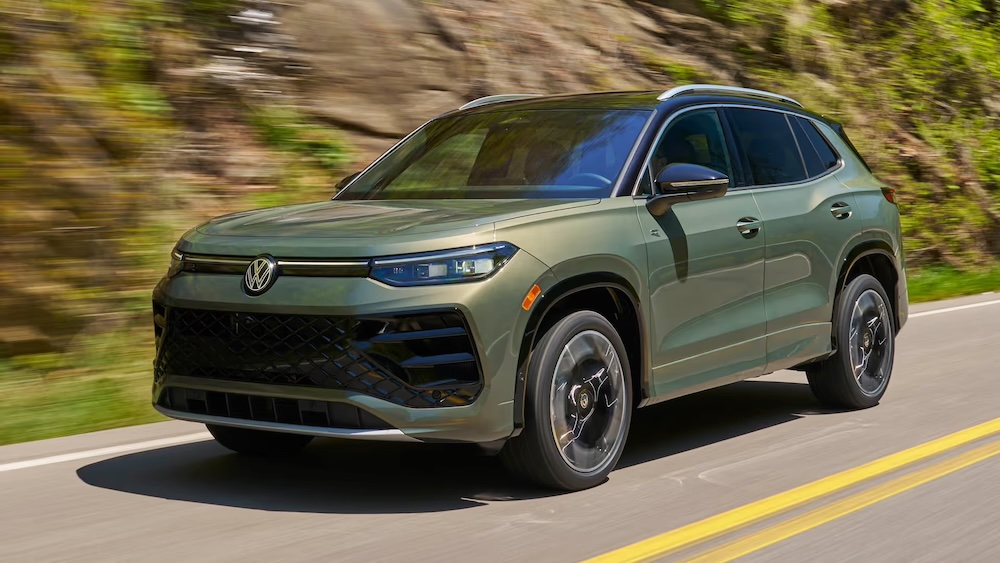
From the outside, the SEL R-Line Turbo looks like Volkswagen took the standard Tiguan formula and tightened everything up. The design reads clean and modern, with the kind of subtle aggression that makes it feel more premium without trying to cosplay as a sports SUV. R-Line styling cues, a sharper stance, and the available lighting elements—including illuminated VW logos—give it that “finished” look that stands out in parking lots full of look-alike crossovers.
Step inside and the SEL R-Line Turbo is where the Tiguan starts making a stronger argument as a near-luxury alternative in the mainstream compact SUV class. The cabin presentation is more upscale than you’d expect at first glance, and this trim’s comfort features are the kind that make a daily commute feel like less of a chore. The highlights include diamond-stitched leather seating surfaces, ventilated front seats, and available massage functionality—features that are still uncommon in this segment unless you jump to a luxury badge.
The headline, though, is the powertrain—and the reason this trim has become the one enthusiasts and smart shoppers keep pointing to. The SEL R-Line Turbo uses a higher-output version of VW’s turbocharged 2.0-liter engine, making 268 horsepower and 258 lb-ft of torque, paired with an 8-speed automatic and standard all-wheel drive. In plain English: this Tiguan doesn’t feel like it’s asking permission to accelerate anymore. It’s the difference between “it’ll get there eventually” and “okay, this actually moves.”
On the road, that extra power changes the whole personality of the vehicle. The Tiguan SEL R-Line Turbo feels more decisive in real-world driving—passing on two-lane roads, jumping into tight freeway gaps, and carrying speed on hills without sounding strained. The tradeoff, depending on your tolerance, is that the ride can feel firmer than the softer, more comfort-first options in this class. If your roads are rough or your priority is pillow-soft isolation, you’ll want to pay attention on the test drive.
Technology is clearly part of Volkswagen’s pitch here, and the SEL R-Line Turbo is designed to win shoppers who care about screens, interfaces, and modern cabin experiences. The available 15-inch touchscreen is a major visual centerpiece, paired with a digital cockpit layout that makes the Tiguan feel current and high-tech. On the safety front, VW’s driver-assistance suite (including features under the IQ.DRIVE umbrella) brings the expected modern tools—helpful for long highway stints and daily traffic—though it’s worth noting that some touch-style controls can be less intuitive than traditional knobs and buttons.
Value is where the compact SUV segment gets brutally competitive, because there are a lot of “good” choices that all do the basics well. The Tiguan lineup starts around $30,805, but the SEL R-Line Turbo sits much higher, with pricing that can begin around $43,085 and climb depending on options. That puts it in the territory where buyers start cross-shopping premium trims from mainstream rivals and even lightly optioned luxury alternatives—so the Tiguan has to justify its price with a stronger cabin experience, noticeably better performance, and a “feels expensive” vibe that you can notice within the first five minutes behind the wheel.
Thankfully, the Tiguan still delivers where most buyers live day-to-day: space, usability, and “family-proof” practicality. With the rear seats folded, VW quotes up to 69.8 cubic feet of cargo room, which is the kind of capacity that matters when you’re hauling Costco runs, sports gear, luggage, or moving-day boxes. Fuel economy expectations land in the mid-20s combined with upper-20s highway potential depending on conditions and driving style, and the coverage baseline is the familiar 4-year/50,000-mile basic warranty range.
So who is this Tiguan really for? It’s for the buyer who wants one vehicle to cover nearly every job—commute, errands, road trips, family duty—but refuses to accept slow acceleration and an “appliance” driving experience as the price of practicality. If you want a compact SUV that feels closer to premium inside, has noticeably stronger power, and looks sharp without being flashy, the SEL R-Line Turbo is the Tiguan to put at the top of your shortlist. If maximum fuel efficiency is your top priority—especially hybrid-style efficiency—or you demand the softest possible ride, there are competitors that may fit your priorities better.
The final verdict is simple: the 2026 Volkswagen Tiguan SEL R-Line Turbo feels like the version Volkswagen should have led with, because it finally unlocks the Tiguan’s full potential. It’s quicker, more upscale, and more confident than the “base formula” compact SUV experience, while still delivering the practical traits that make this segment so popular. It won’t be the cheapest path into a Tiguan, but if you’re already shopping top trims and you want something that feels a step above the usual suspects, this is the one that makes the strongest case.
Before you buy—especially in a trim level where pricing and dealer markups can swing wildly—do one smart thing first: compare real offers. Head to Quotes.EverymanDriver.com to check real dealer pricing in your area, compare deals, and make sure you’re not overpaying just because a vehicle is popular or “hard to find” this week.